31 Braids in Front Straight Hair in Back Ideas
31 Braids in Front Straight Hair in Back Ideas
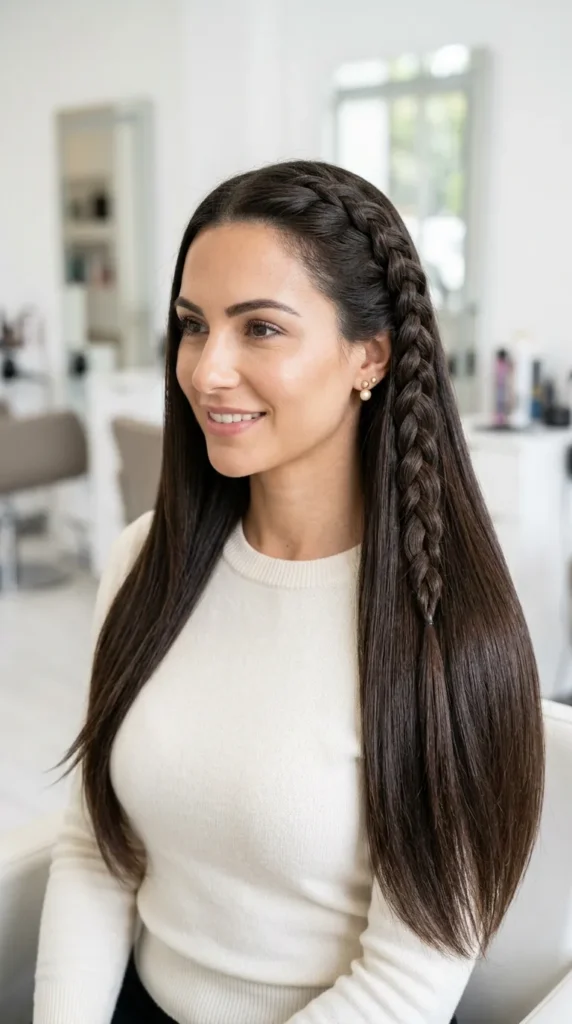
Braids in front with straight hair left flowing in back is genuinely one of the most fun, low commitment hairstyle trends around. It takes something structured and intentional at the hairline and pairs it with something loose and effortless everywhere else, creating a look that feels playful without requiring a full styling commitment. A good version of this style feels balanced and considered. A poorly done version can look disconnected, like two separate hairstyles competing rather than complementing each other. The difference lies in proportion, braid placement, and how well the transition between braid and straight length actually flows.
These thirty one approaches show you different ways to combine front braids with straight hair, from subtle single braids to bolder multi braid combinations. Whether you have short or long hair, whether you want an everyday casual version or something more elevated, there is an approach here that works for you. Let me show you what this style actually involves and how to make it work for your life.
1. Classic Single Front Braid
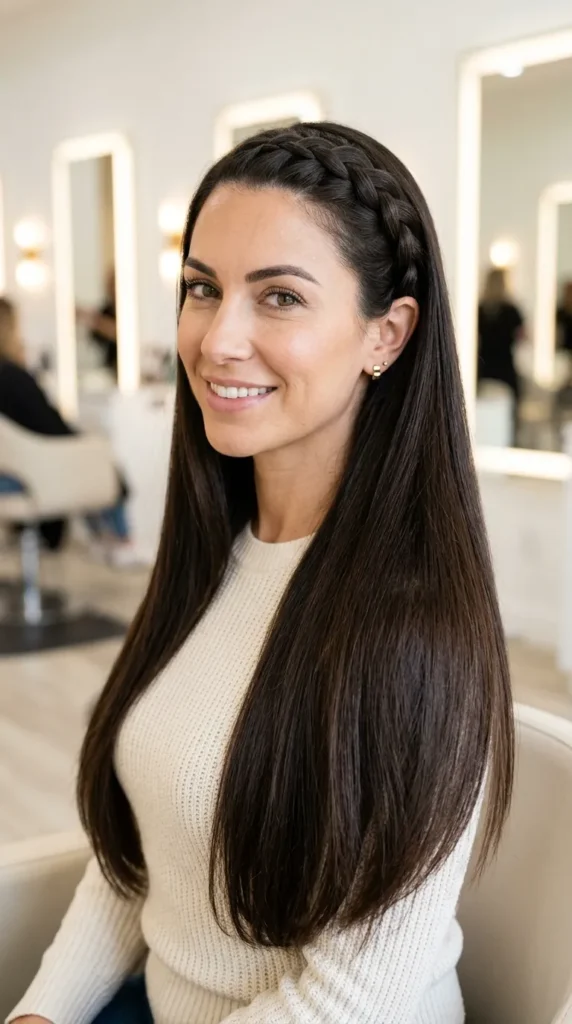
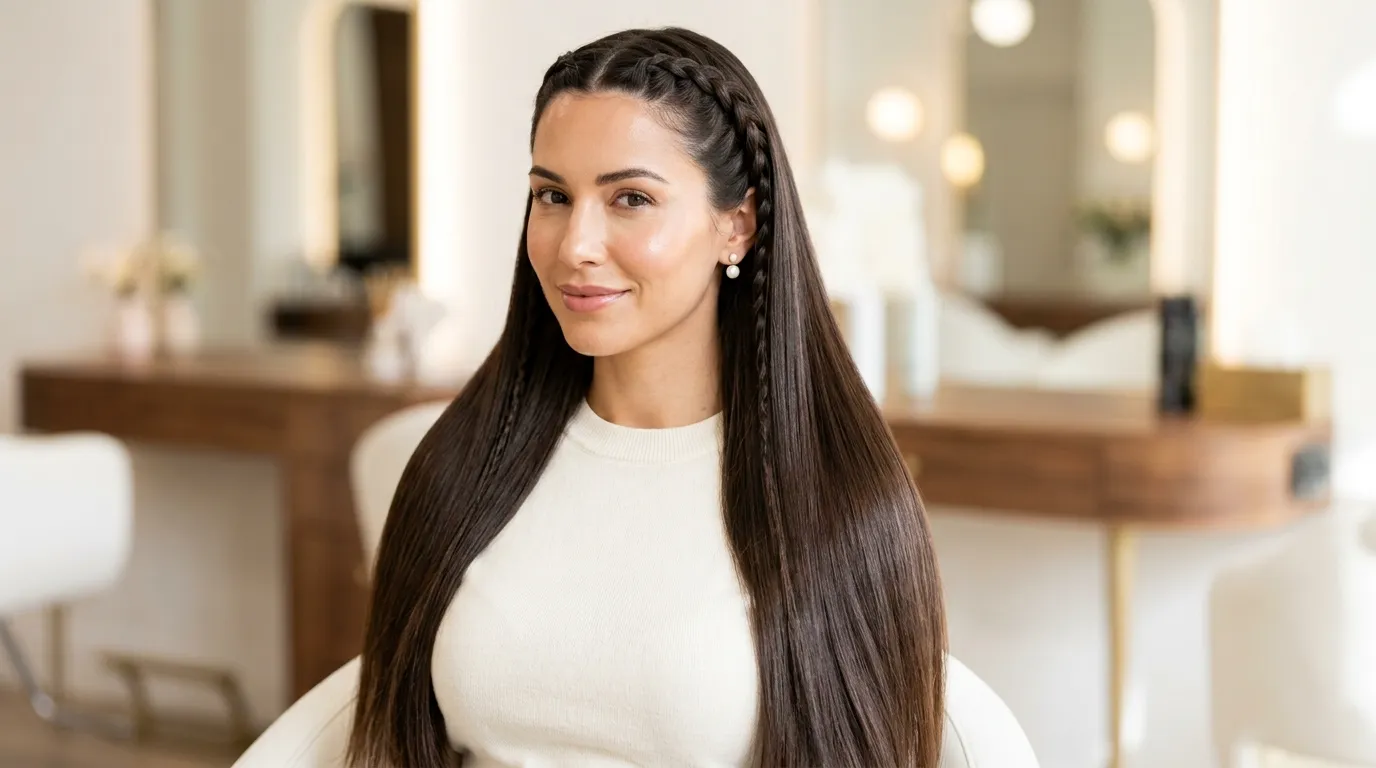
One simple braid starting at the hairline and secured just past the crown, blending seamlessly into straight hair that flows freely down the back and shoulders. Many people find this small adjustment makes a real difference in how the style wears day to day. This is genuinely a first version worth trying before attempting anything more elaborate.
This version works beautifully as an easy everyday style. Secure the braid with a small clear elastic so it stays invisible against the surrounding straight length. It is a detail worth revisiting periodically as your personal style naturally evolves. It complements nearly every hair length when practiced a few times beforehand.
2. Double Front Braids
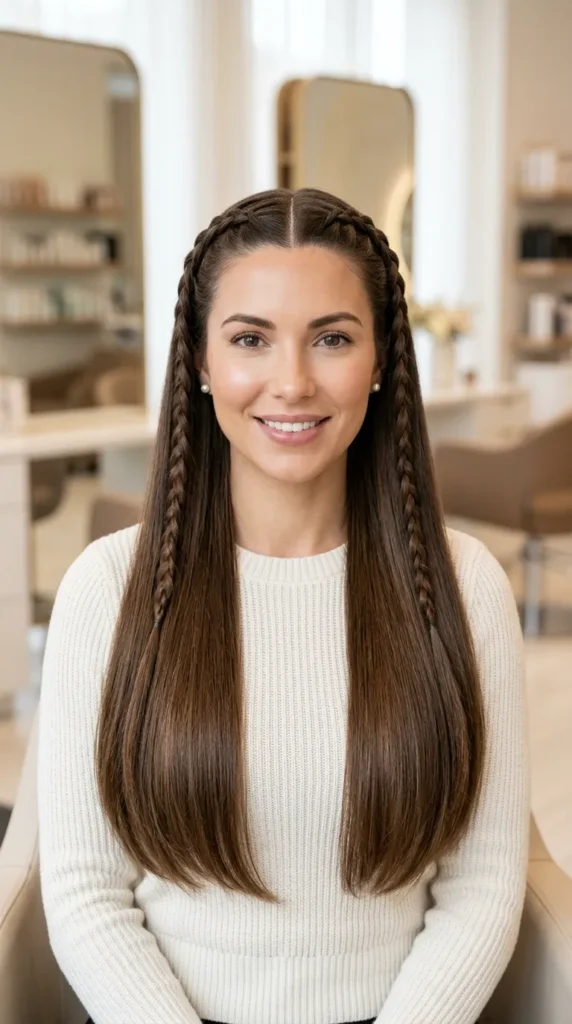
Two symmetrical braids starting on either side of the part, meeting at the back of the head where straight hair continues down naturally without interruption. This choice tends to suit a wide range of hair textures and lifestyles fairly easily. This approach requires very little extra time once the braiding motion feels natural.
This combination creates a balanced, structured look at the front while keeping the overall style casual. Keep the braids loose rather than tight for a softer finish. It is worth practicing a few times before wearing it out for the first time. It remains one of the most requested combinations among people new to braiding.
3. Thin Micro Braids at the Hairline
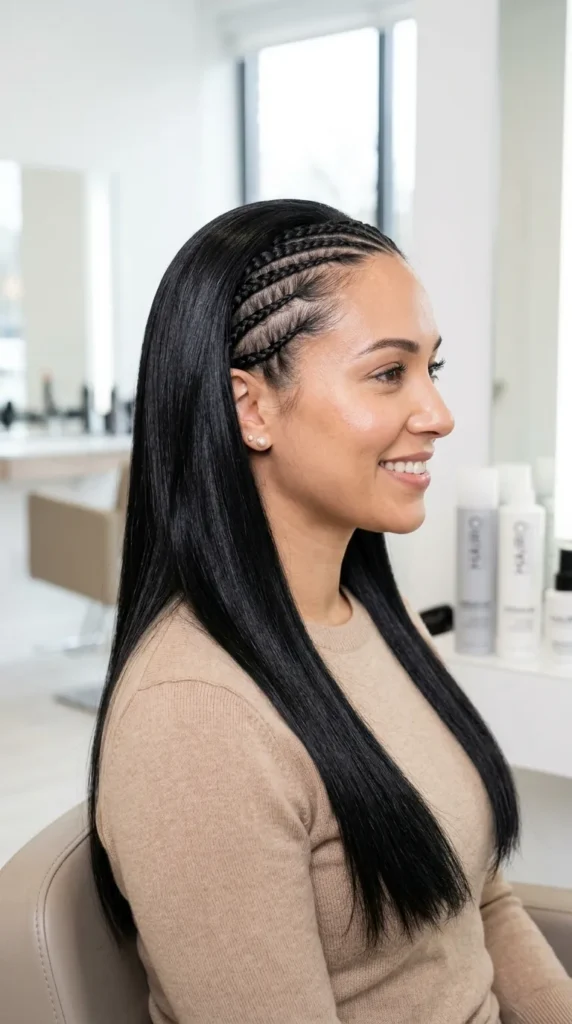
Several thin, delicate braids woven along the hairline specifically, creating a detailed, textured frame around the face while the rest of the hair stays completely straight. Most people adapt to this small technique within just a few tries at home. This method has proven itself across many different styling occasions and settings.
Micro braids at the hairline add intricate detail without much bulk. This version works especially well for people wanting a subtle nod to the trend. This detail often becomes the feature that people compliment the most about the style. It offers a genuinely practical balance between structure and effortless daily wear.
4. Chunky Front Braid
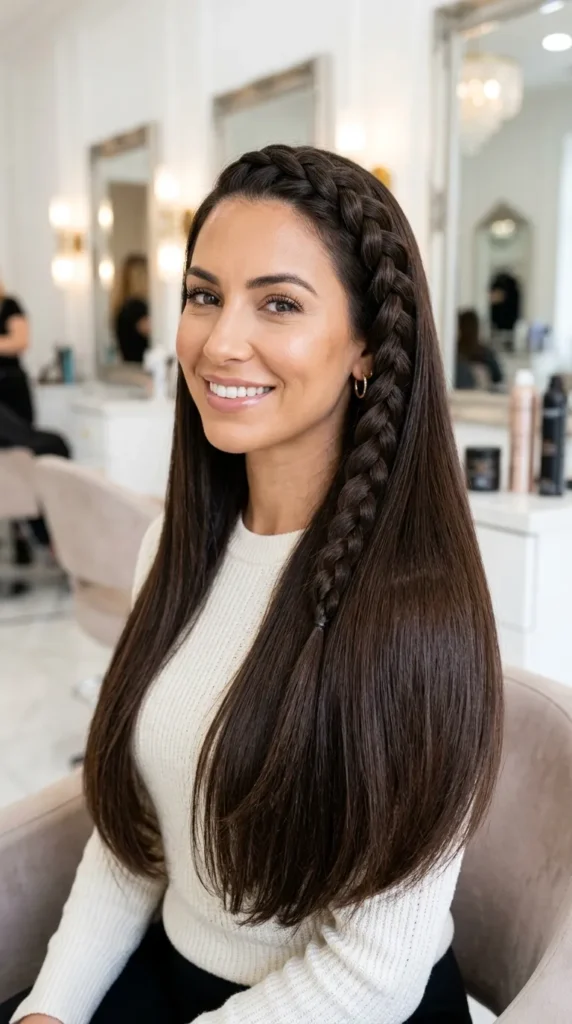
A single, thicker braid using larger sections of hair, creating a bold, statement making detail at the front that contrasts nicely against sleek straight length behind it. A quick practice run at home ensures this combination matches your expectations closely. This approach continues to be recommended by stylists teaching braiding techniques.
Chunky braids read as a stronger design choice than thinner versions. This works well for people wanting the braid to feel like a genuine focal point. This choice reflects personal comfort as much as it reflects practical everyday convenience. It suits both quick mornings and slightly more prepared styling sessions equally well.
5. French Braid into Straight Hair
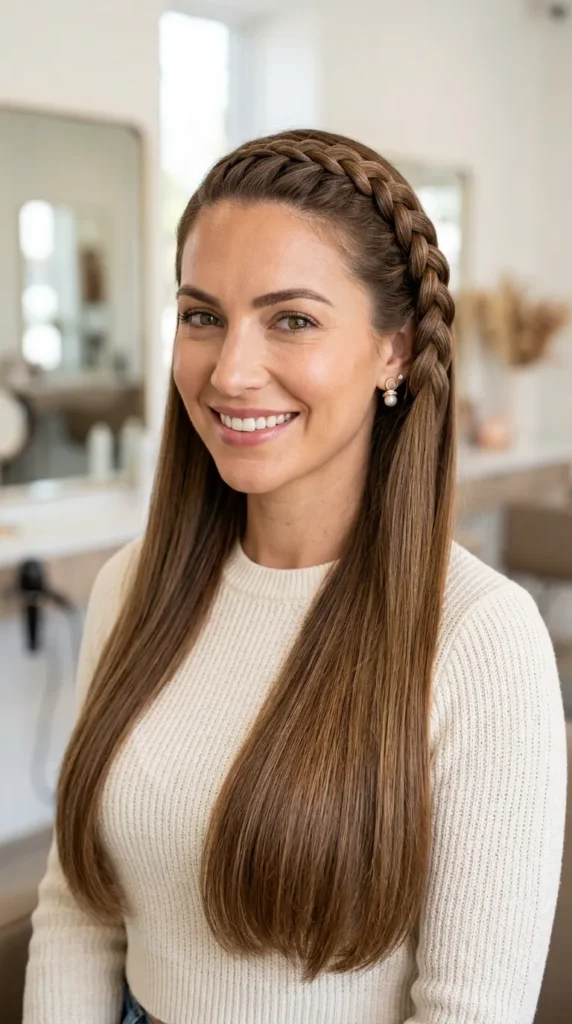
A French braid started at the hairline and woven down several inches before releasing into straight hair, creating a smooth, gradual transition between the two textures. It is an easy detail to incorporate without disrupting your existing hair routine. This method pairs naturally with most existing braiding skills already developed.
French braids require practice to master the weaving technique. Once learned, this version creates one of the most seamless transitions in the entire style category. This adjustment works especially well when paired with the right supporting products. It remains a dependable choice regardless of the season or specific occasion.
6. Dutch Braid into Straight Hair
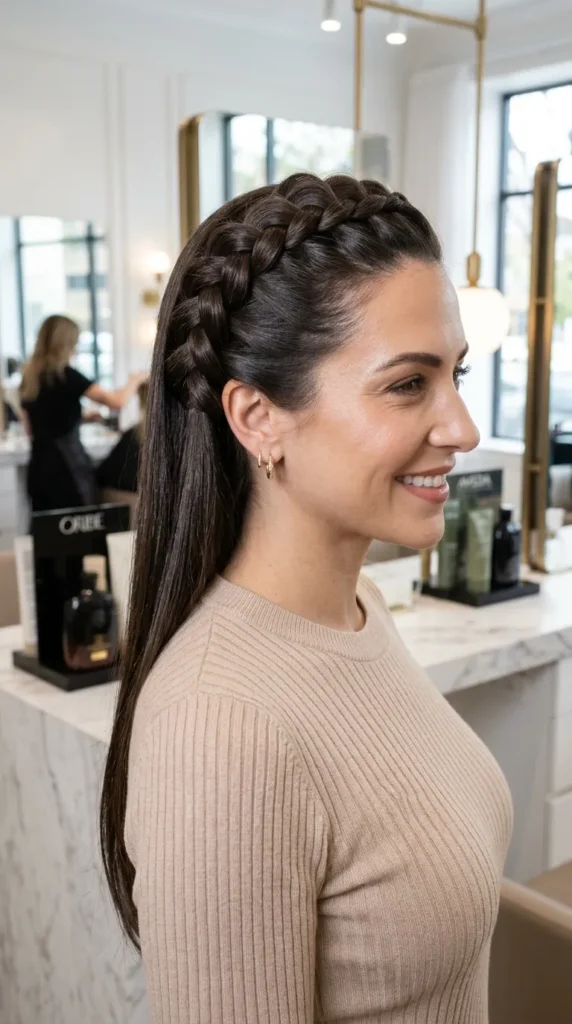
A Dutch braid, woven under rather than over, started at the hairline and released into straight length. The raised braid texture stands out slightly against the sleek hair. This is one of the easiest ways to personalize the style without much extra effort. This approach has helped many people build genuine confidence with braiding overall.
Dutch braids create a more three dimensional, raised appearance than French braids. This version suits people wanting the braid to feel visually more prominent. Most people can execute this look with tools already sitting in their bathroom. It offers flexibility that few other beginner friendly techniques can genuinely match.
7. Side Swept Single Braid
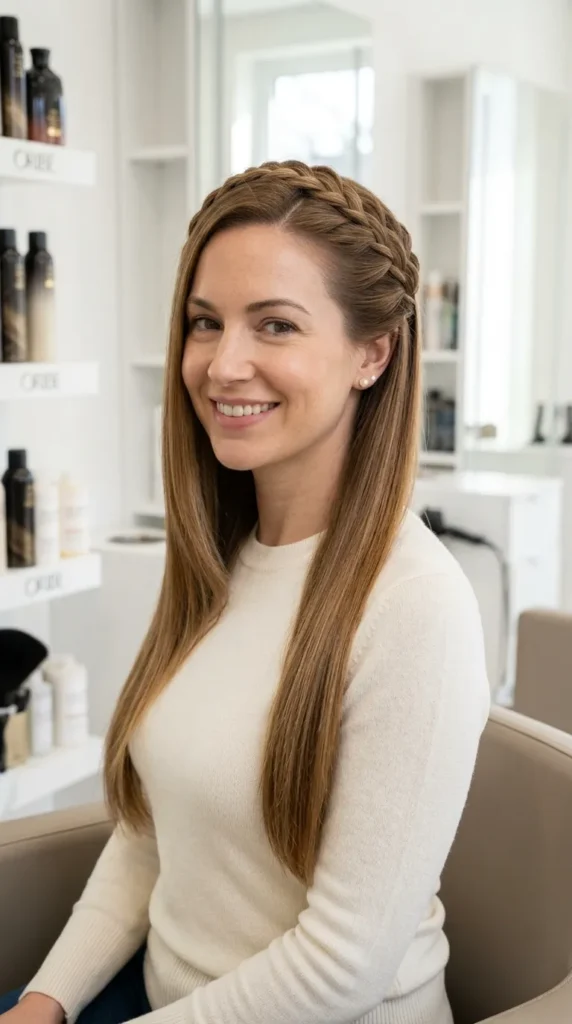
A single braid started on one side of the part and pulled diagonally across the front, connecting into straight hair rather than following a straight vertical line. It is worth practicing this specific technique a few times before an important event. This is a reliable starting point worth practicing before trying bolder variations.
This asymmetrical placement adds visual interest and works especially well paired with a deep side part. The diagonal line feels intentional and fashion forward. This small customization often becomes a defining feature of your overall everyday look. It photographs well and holds up through active, busy everyday schedules.
8. Braided Crown with Straight Length
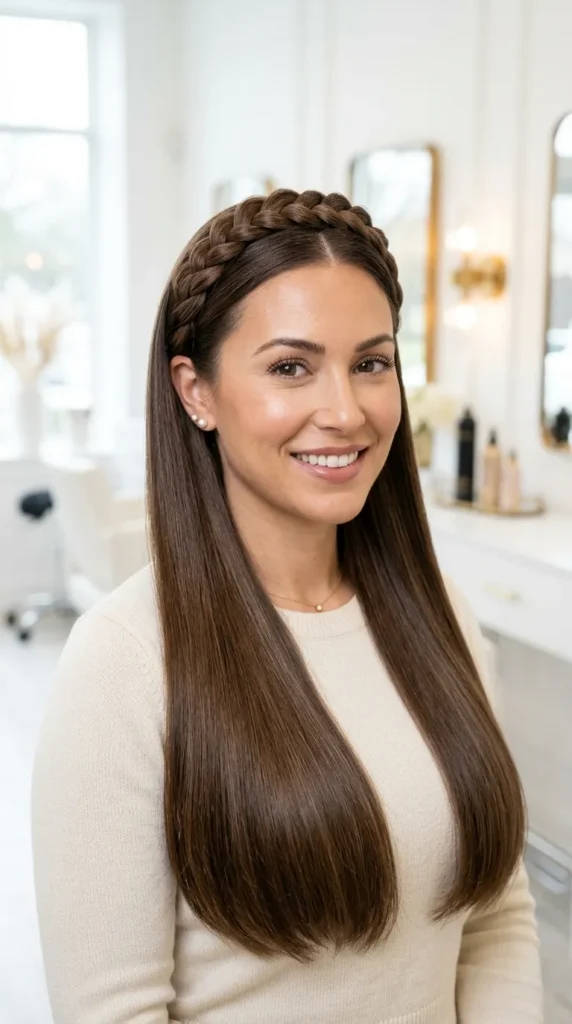
A braid that wraps partially around the crown like a headband, connecting back into the straight hair rather than hanging as a single vertical strand. Watching a tutorial video beforehand helps you master this detail more quickly. This detail continues to be a favorite among people just starting to braid.
Crown braids create a polished, slightly romantic finish. This version works beautifully for both casual daytime wear and slightly more dressed up occasions. This approach genuinely rewards a bit of practice during the first few attempts. It suits nearly every stage of building a more varied styling routine.
9. Cornrow Front with Straight Back
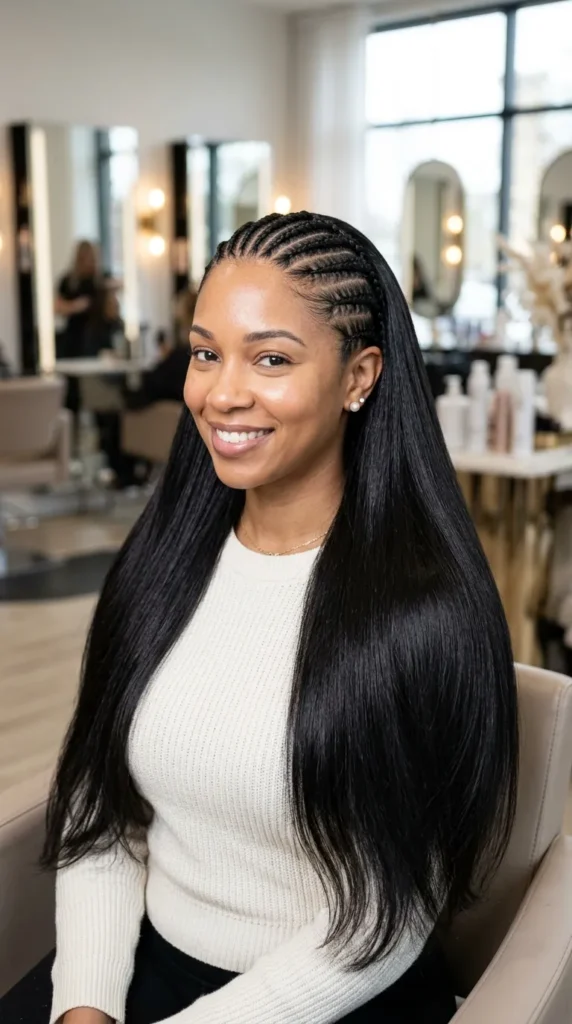
Cornrows braided flat against the scalp across the front hairline, transitioning into loose straight hair once the cornrow pattern reaches the crown or slightly beyond. Most people find this particular element easy to maintain across a busy day. This approach rewards a little extra patience while the technique becomes familiar.
Cornrow fronts create a bold, graphic look that lasts multiple days without restyling. This version suits people wanting a longer lasting front detail. This choice tends to photograph well across nearly every casual or formal setting. It remains genuinely versatile across nearly every hair type and texture combination.
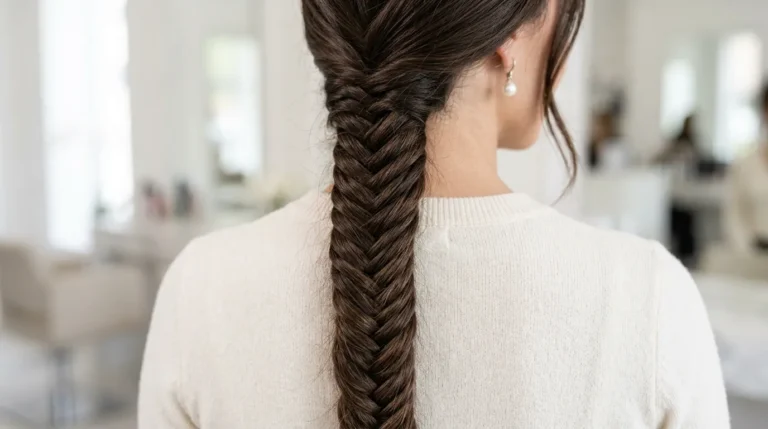
10. Fishtail Braid into Straight Hair
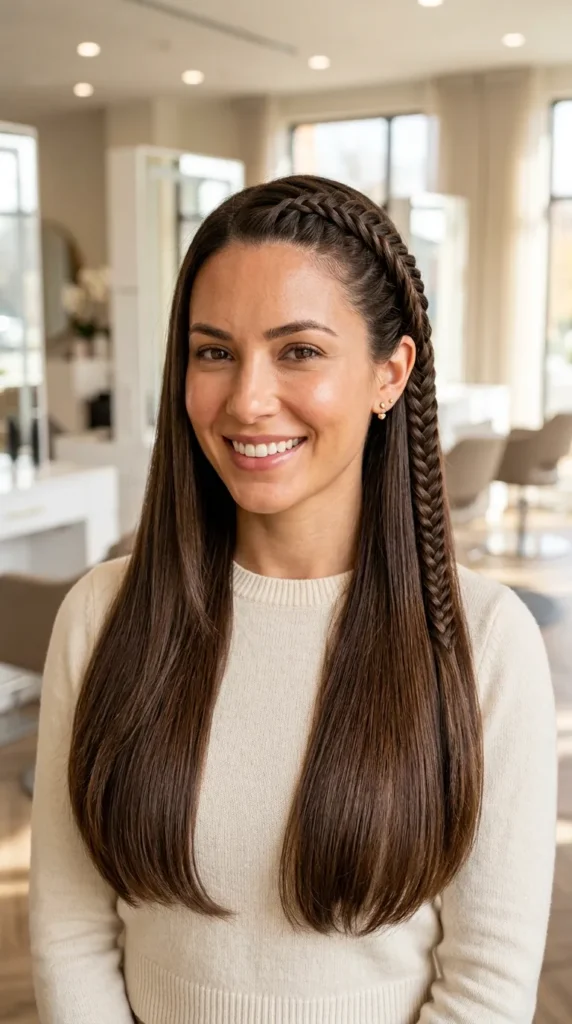
A fishtail braid started at the hairline, using its signature woven texture before releasing into straight length. The fishtail pattern adds delicate detail to the front. It is a small investment of practice time that pays off with daily ease later. This method has stood out as a consistently smart starting point for many people.
Fishtail braids take slightly longer to create than standard three strand braids. The finished texture reads as more intricate and detailed overall. This detail suits people wanting a slightly more personalized and considered final look. It offers real satisfaction once the motion becomes second nature over time.
11. Braided Bangs with Straight Length
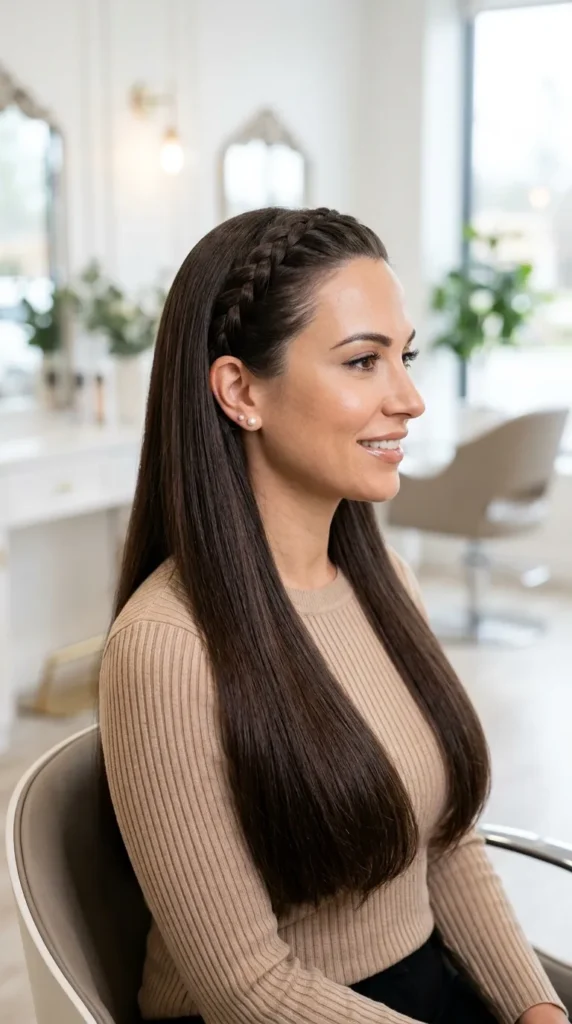
Front sections that would normally be worn as bangs braided instead and pulled back, blending into straight hair rather than framing the face loosely. A friend can help you perfect this technique if it feels tricky at first. This is genuinely worth trying if braiding still feels new or unfamiliar to you.
This version works well for people growing out bangs who want a styled solution during the transition. The braid keeps shorter pieces controlled and neat. It is genuinely satisfying once the full style comes together as intended. It complements nearly every existing hairstyle rotation when introduced gradually.
12. Two Tone Braids with Straight Hair
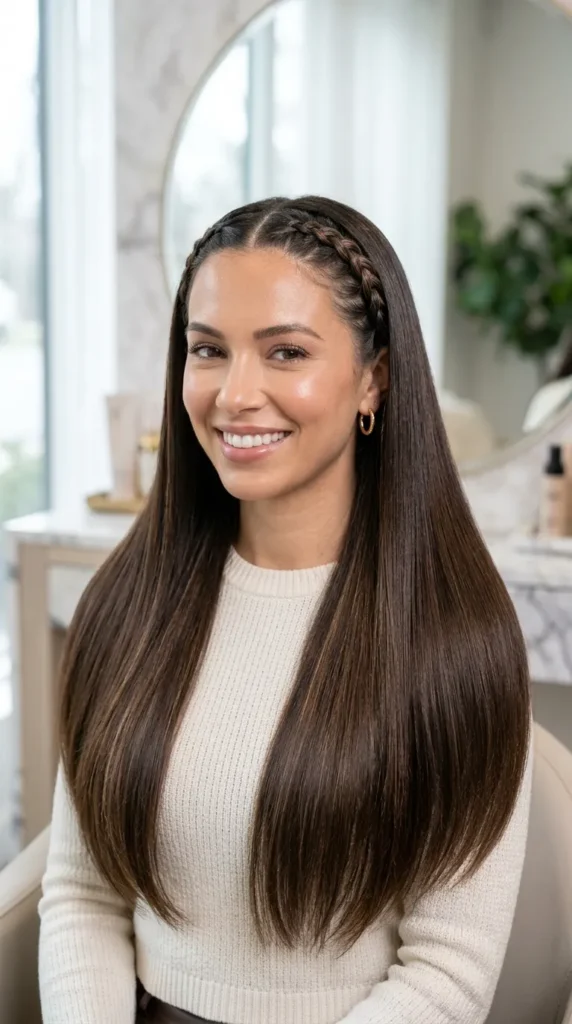
Braids incorporating a subtle color extension or ribbon woven through, adding a decorative element that contrasts against the natural tone of the straight hair behind. This is a genuinely popular choice among people experimenting with braided styles. This approach has helped many people simplify their everyday styling routine significantly.
Two tone braids add a playful, personalized detail. This version works especially well for festivals or special occasions wanting a slightly more decorated look. This choice works particularly well when paired with the right supporting accessories. It offers a flexibility that few other single techniques can genuinely match.
13. Braids with Beach Waves in Back
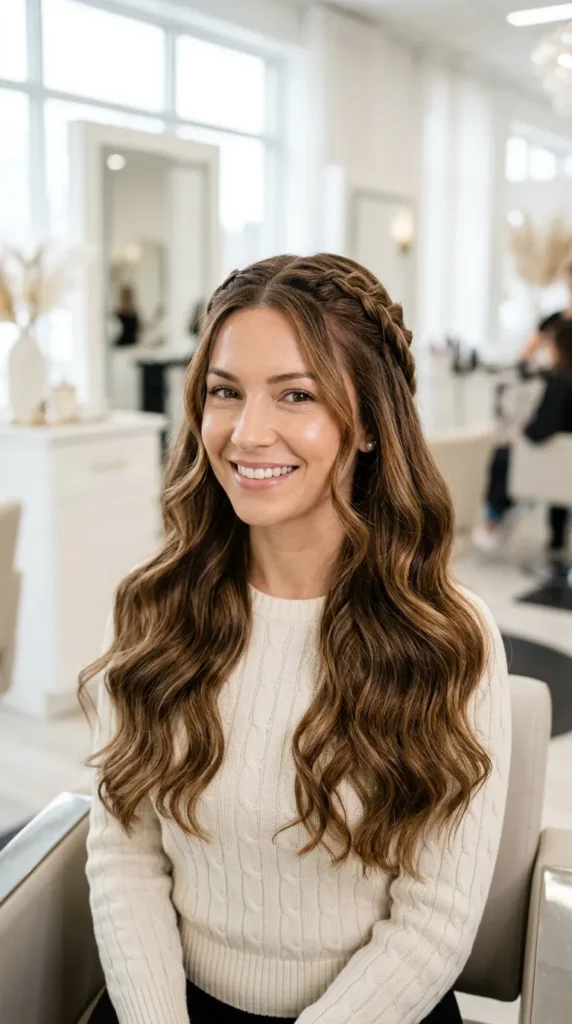
Front braids paired with loosely waved rather than perfectly straight hair in back, softening the overall contrast between the structured and unstructured sections. It generally requires no significant extra effort beyond your regular morning routine.
This combination feels slightly more relaxed than a fully sleek straight back. The waves add texture that complements the braid without competing with it. This option is worth considering seriously while planning your everyday hairstyle rotation.
14. Braids with Sleek Straight Back
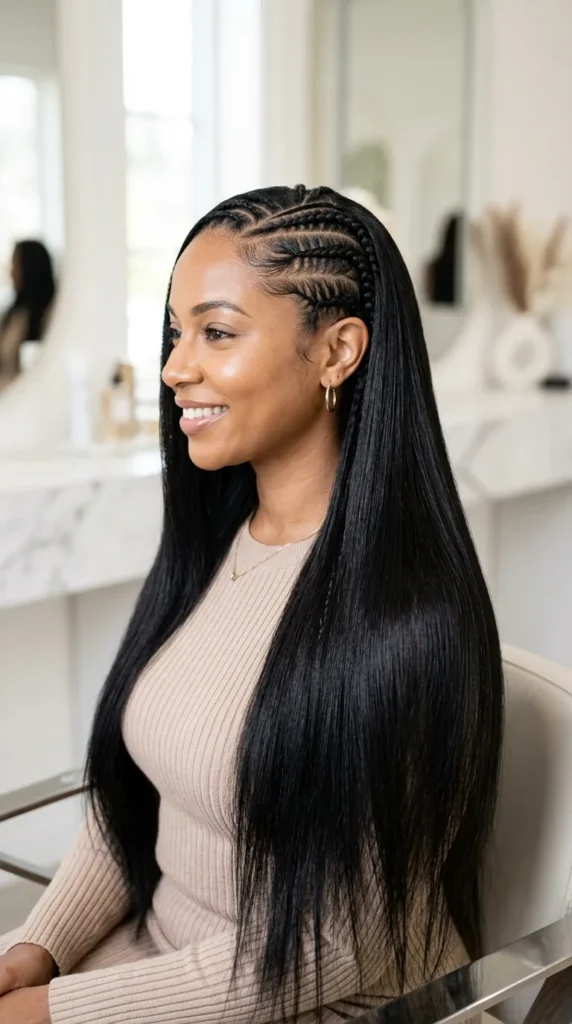
Front braids paired with perfectly smooth, flat ironed straight hair in back, creating maximum contrast between the textured front and the glassy, polished length. This choice tends to photograph particularly well under natural daylight and indoor lighting.
This version reads as more polished and intentional. Choose a smoothing serum for the straight section to achieve a genuinely glossy, frizz free finish. It adds a layer of thoughtfulness that elevates the entire hairstyle noticeably.
15. Braided Half Up Style
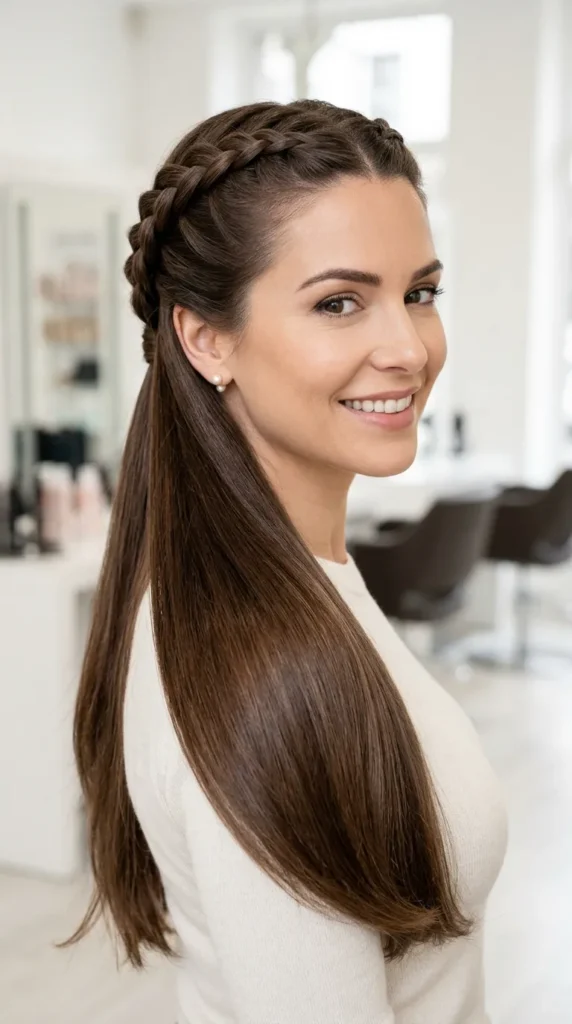
A single or double braid incorporated into a half up style, where the braided sections are pulled back and secured while straight length remains down. A quick practice session at home ensures this detail matches your expectations exactly.
This combination feels slightly more finished than a loose braid alone. This version works especially well for warmer weather when keeping hair off the face matters. This small customization is one of the easiest ways to personalize a classic look.
16. Braids with Face Framing Pieces
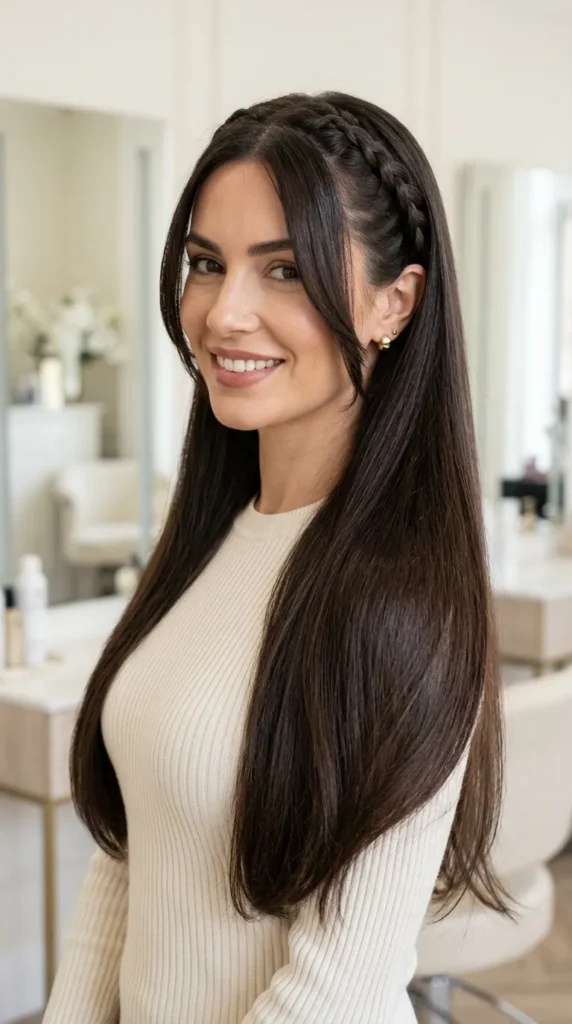
Front braids paired with a few pieces left loose around the face, softening the overall structure and adding a slightly undone, romantic quality to the style. It is worth trying this specifically if it is not already part of your usual style.
Face framing pieces should be pulled out gently after braiding for a natural finish. This detail balances the structure of the braid with softness. This detail often makes a genuinely noticeable difference in how polished you feel.
17. Braids for Short Hair
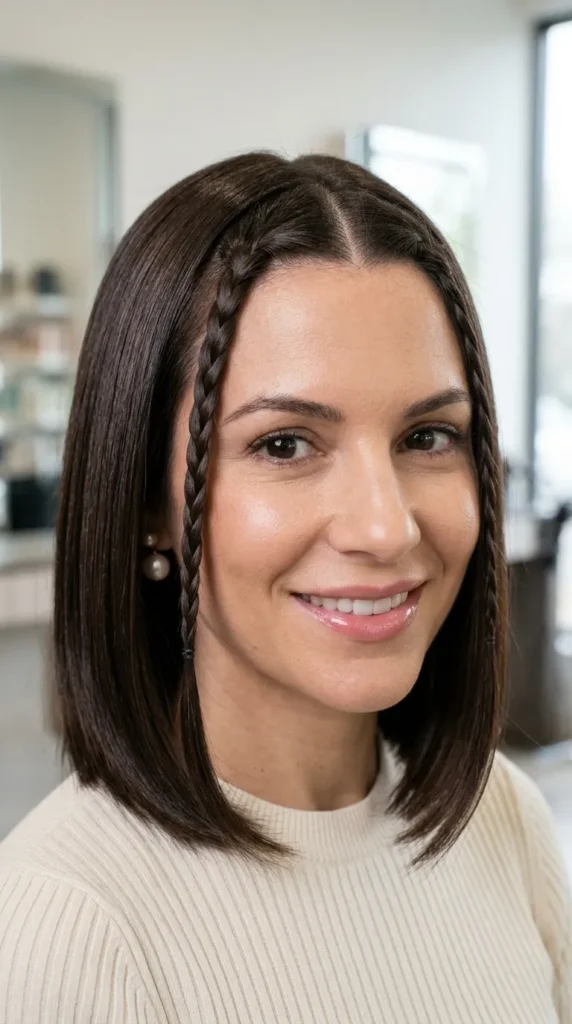
Small, tight braids created using the front sections of shorter hair, transitioning into straight length that may only extend a few inches past the braid itself. Most people grow to appreciate this technique more with each passing attempt.
This version proves the trend works even on shorter lengths. Focus braids specifically at the hairline where there is enough length to work with. It is worth trying even if you feel a little uncertain about it at first.
18. Braids for Long Hair
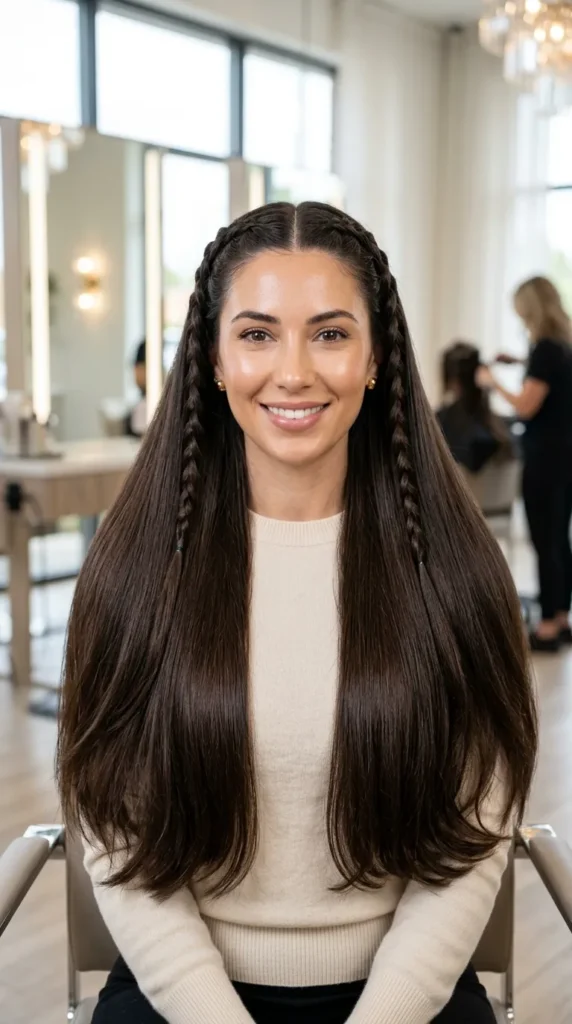
Longer braids extending several inches past the crown before releasing into straight length that flows well past the shoulders, creating a dramatic overall silhouette. This choice pairs naturally with most existing hairstyles already in your rotation.
Long hair allows for more elaborate braiding techniques and greater length contrast. This version creates one of the most visually striking versions of the style. It remains a dependable option regardless of the specific occasion or season.
19. Braids for Curly Hair Blended with Straightened Ends
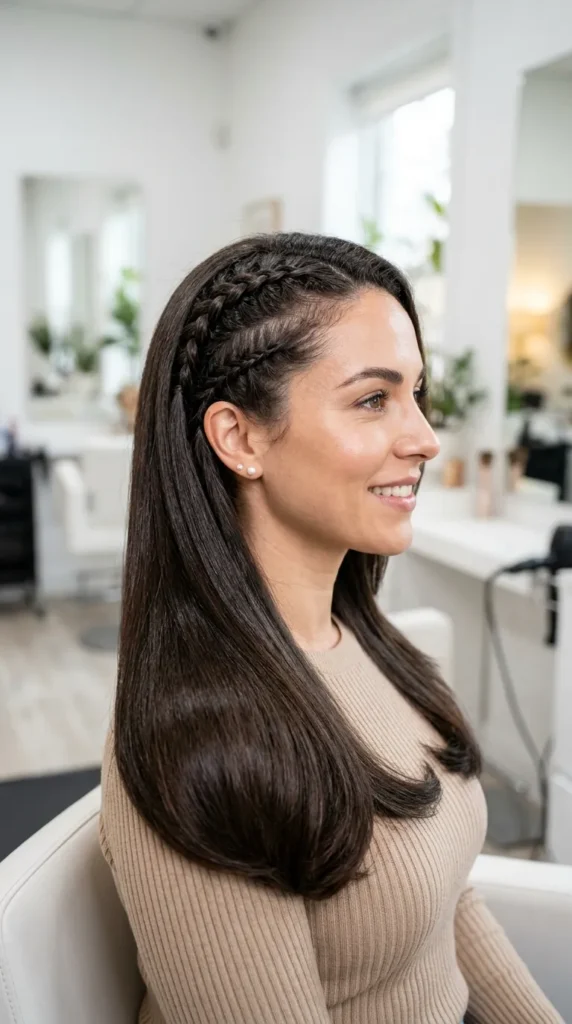
Front braids created using naturally curly hair, transitioning into ends that have been straightened, creating an interesting textural contrast throughout the entire hairstyle. This approach has stood the test of time across many different braided hairstyle trends.
This combination celebrates natural texture at the front while offering a sleeker finish through the length. This version requires careful blending at the transition point. It offers a genuinely practical balance between structure and everyday simplicity.
20. Braids with Accessories Woven In
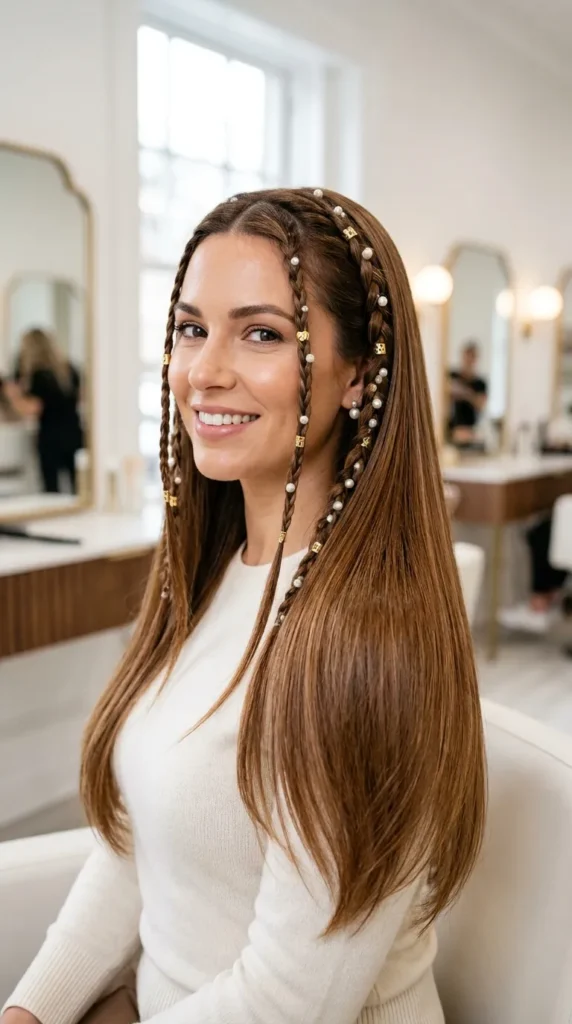
Small beads, ribbons, or clips woven directly into the front braids, adding a decorative element that elevates the style for special occasions or festival settings. This method has proven itself across many different hair lengths and textures.
Accessories should be lightweight enough not to weigh down the braid itself. This detail adds personality without requiring an entirely different hairstyle approach. It offers a genuinely practical balance between style and everyday manageability.
21. Braids with Middle Part
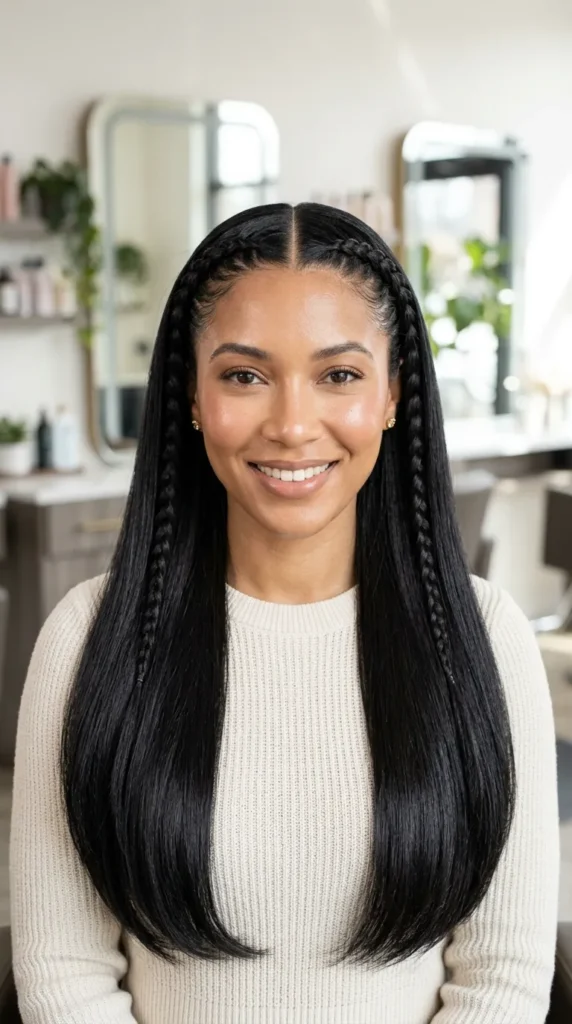
Front braids starting from a centered middle part, creating a symmetrical, balanced foundation before transitioning into straight hair on either side of the face. This approach continues to be recommended by people experienced with braided styling.
Middle parted braids suit nearly every face shape. This classic placement feels timeless and pairs especially well with simple, understated straight length behind it. It suits both casual days and slightly more formal occasions equally well.
22. Braids with Deep Side Part
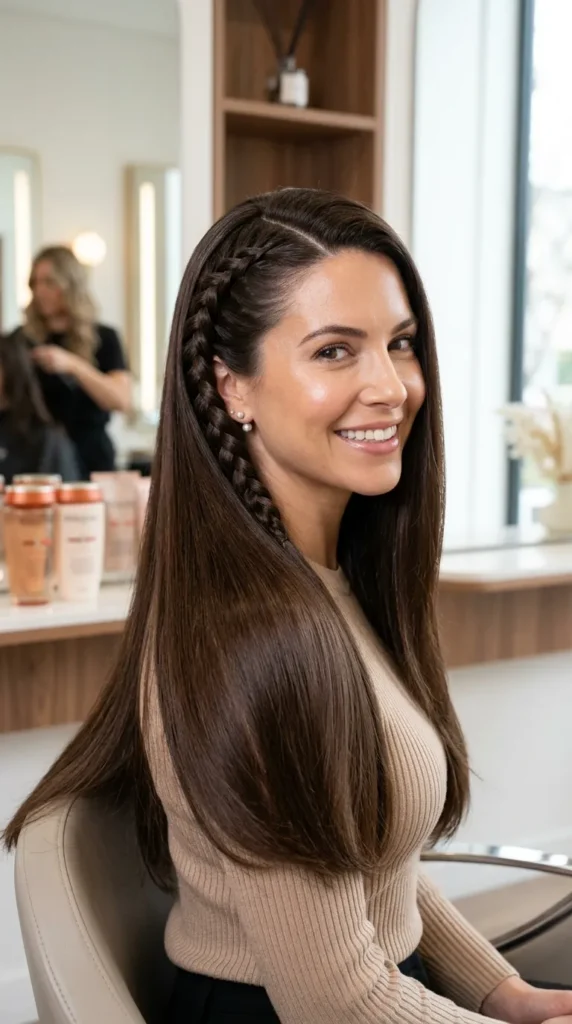
Front braids starting from a deep side part rather than a centered one, creating asymmetry and added volume on one side of the head specifically. This method pairs naturally with most existing hair accessories already on hand.
Deep side parted braids add a slightly more dynamic, fashion forward quality. This version flatters most face shapes while adding visual interest. It remains a dependable choice regardless of the weather or specific occasion.
23. Braids for Workout Styling
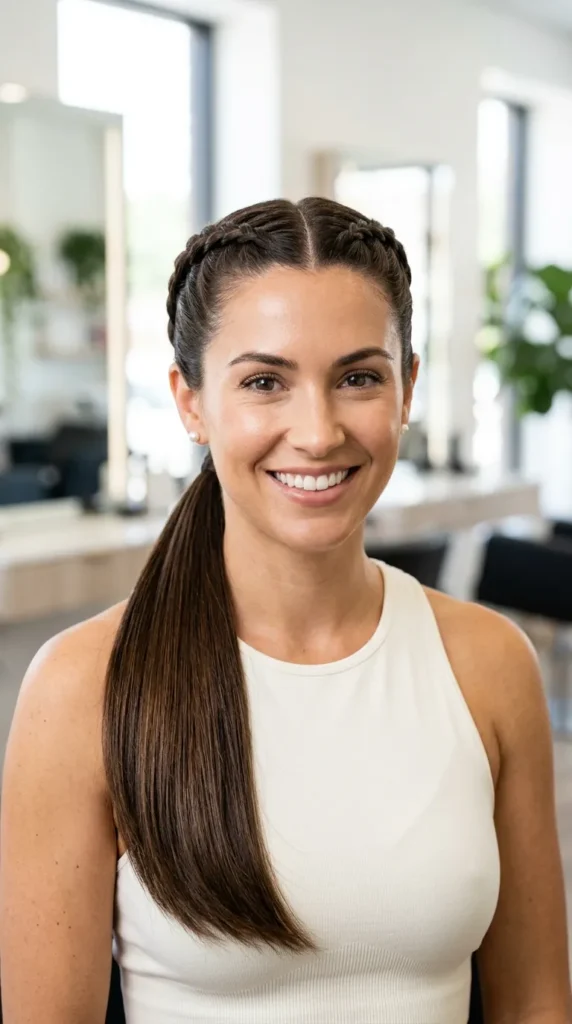
Simple, secure front braids designed specifically to keep hair off the face during exercise, transitioning into straight or ponytail styled length in back. This approach has helped many people feel genuinely creative with everyday styling.
This practical version prioritizes function alongside style. Braids should be tight enough to stay secure through movement and sweat throughout a workout. It offers flexibility that few other braided combinations can genuinely match.
24. Braids for Formal Occasions
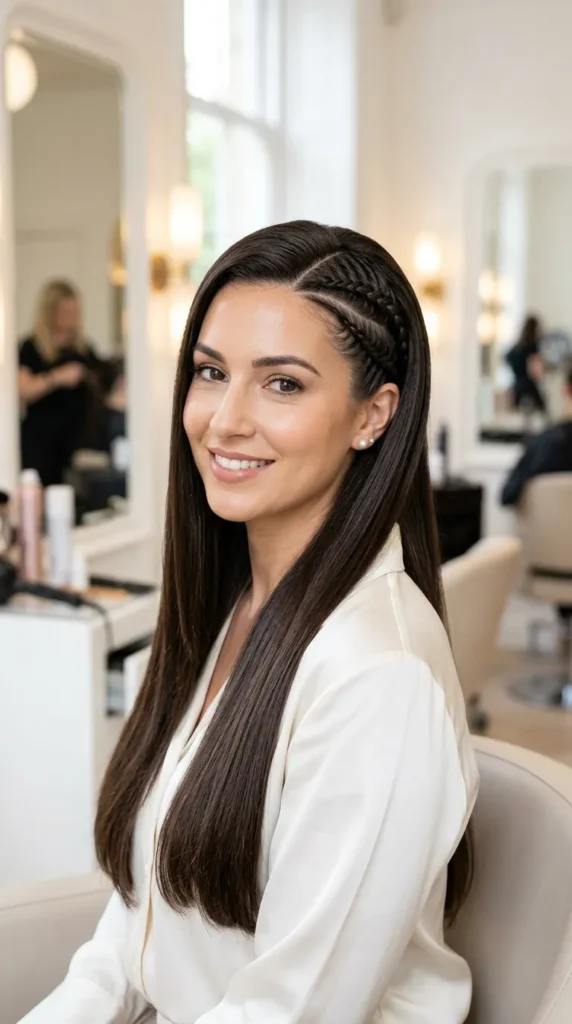
More elaborate, polished front braids paired with sleek, glossy straight length, creating an elevated version of the trend suitable for weddings or formal events. This is a reliable choice worth keeping in your rotation throughout the week.
Formal versions benefit from professional styling and a strong hold hairspray. This combination feels sophisticated while still incorporating a playful braided detail. It photographs well and holds up through long days of activity and movement.
25. Braids with Bangs Left Out
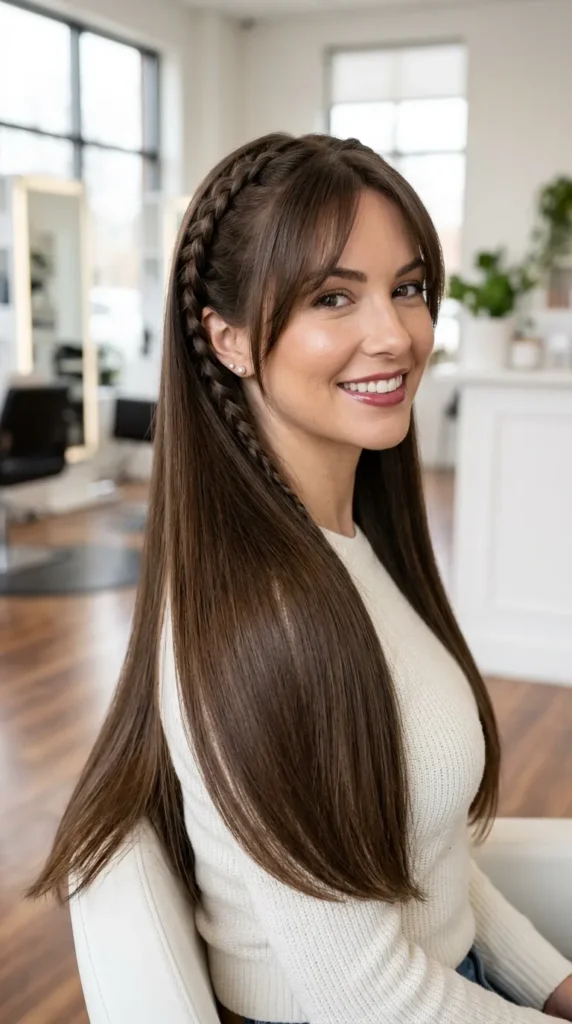
Front braids created while leaving a soft fringe or bang section completely loose, adding another design element that frames the face separately from the braid. This detail continues to be a favorite among people who enjoy experimenting with hair.
This combination requires coordinating the bang length with the braid placement. This version suits people who love bangs but also want to try this trend. It suits nearly every occasion from casual errands through more formal events.
26. Braids Inspired by Celebrities
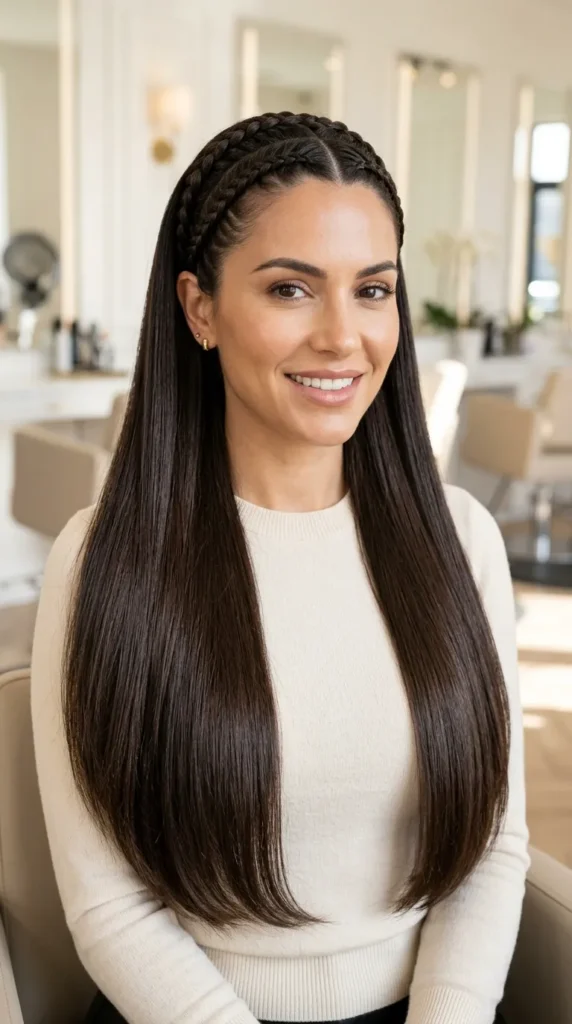
Braid and straight hair combinations adapted from celebrity references, finding someone whose version you admire and translating that placement for your own hair type. This approach rewards a little extra practice time while learning the technique.
Celebrity inspired versions work best when you choose a reference with similar hair length and texture to your own starting point and features. It remains genuinely versatile across different hair types and personal style preferences.
27. Braids with Color Dimension
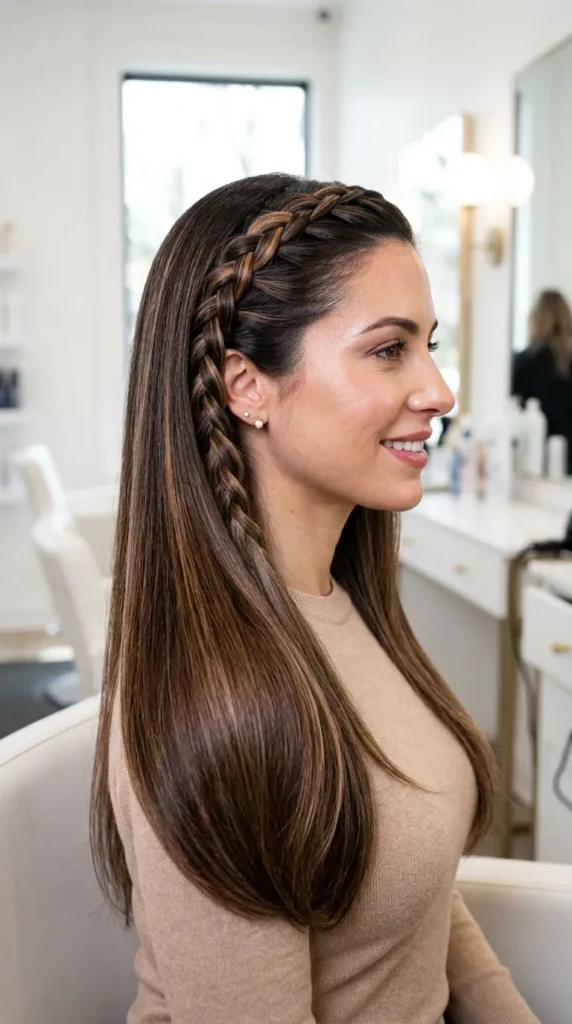
Front braids that showcase dimensional color particularly well, since the woven pattern displays highlights or lowlights in a genuinely eye catching, textured way. This method has stood out as a consistently fun choice for many people.
This combination elevates the style significantly, since color and braid texture work together to create depth that a single flat tone cannot achieve. It offers creativity and ease in equal measure throughout a busy week.
28. Braids with Minimal Product
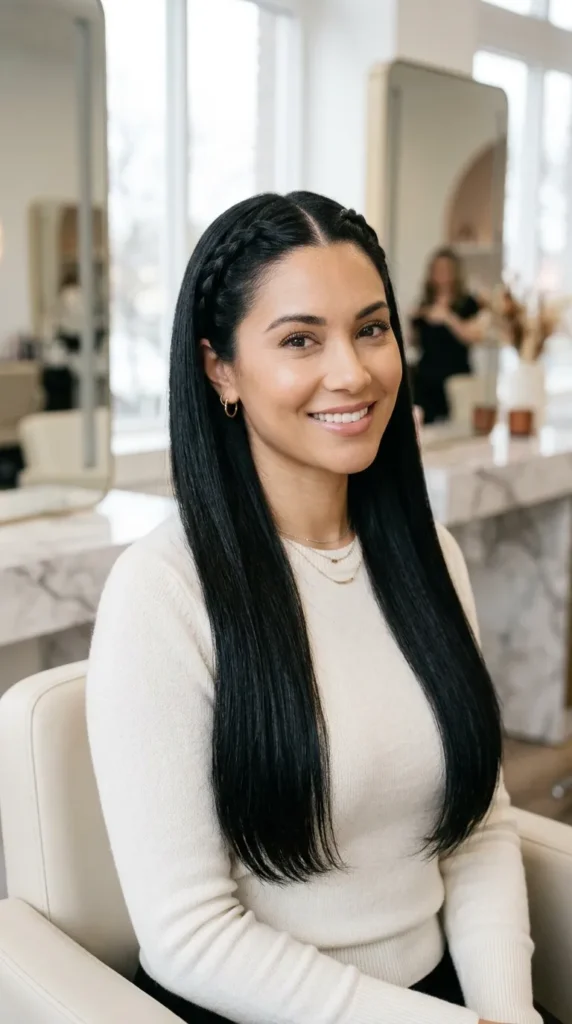
A low maintenance version using minimal product, relying on natural hair texture and a simple braiding technique rather than heavy styling tools or sprays. This is genuinely worth trying if your current styling routine feels a bit repetitive.
This approach suits people wanting the look without extensive daily effort. A light smoothing cream on the straight section is often all that is needed. It complements nearly every existing wardrobe when chosen thoughtfully and intentionally.
29. Braids Maintenance and Styling Tips
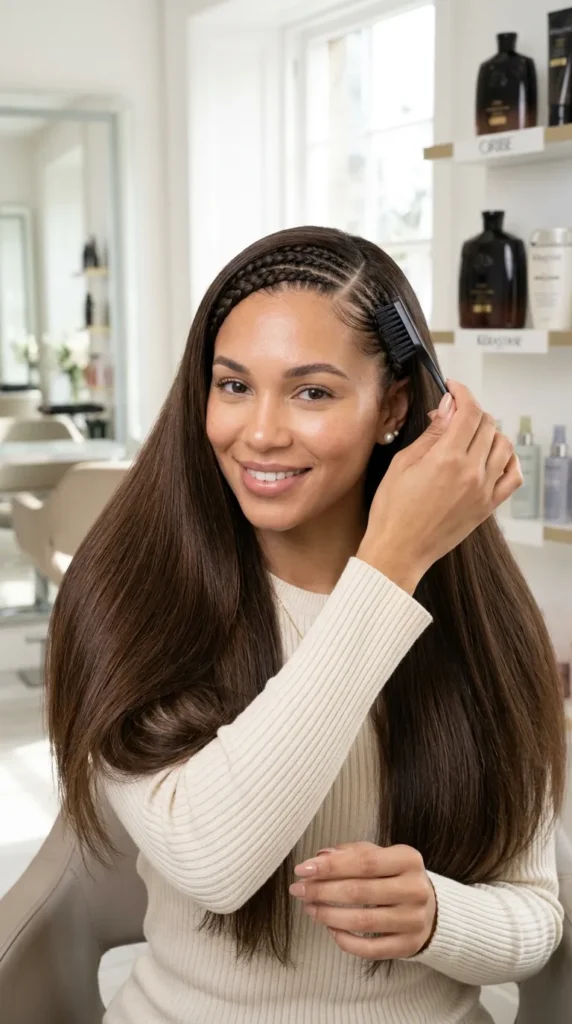
Understanding how to maintain this style throughout a full day, including securing loose ends and refreshing the braid without needing to completely restyle everything. This approach requires very little extra effort once the technique feels familiar.
A small amount of edge control or gel helps keep flyaways controlled along the braid. This detail keeps the style looking neat for hours. It remains one of the more versatile combinations for everyday styling variety.
30. Transitioning Between Braided and Straight Styles
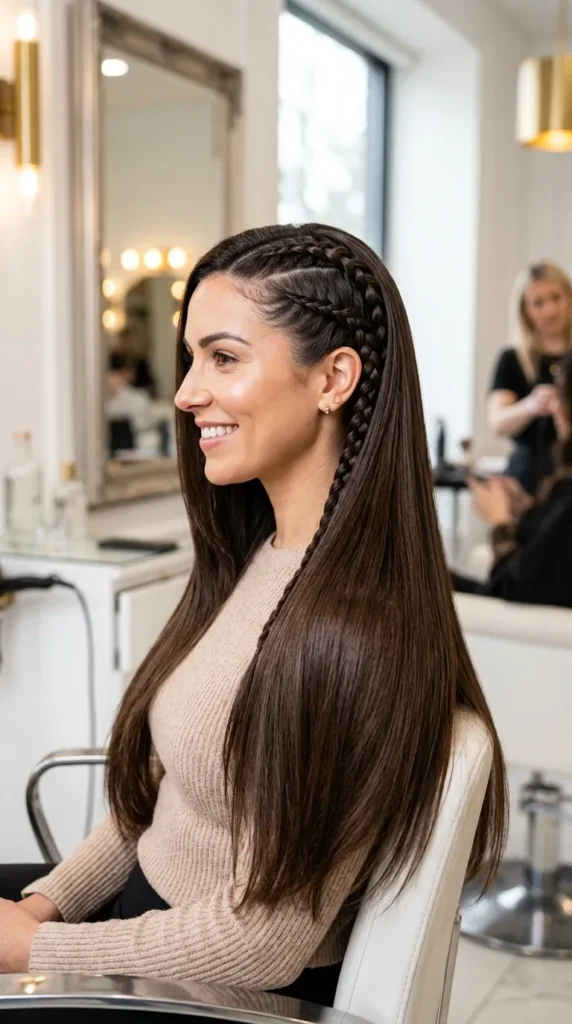
Understanding how to move between a fully braided style and this combination look, using the same base technique with adjusted length and placement each time. This method has proven itself popular across many different personal style preferences.
This flexibility means the style can be adjusted daily depending on your mood, time available, and the specific occasion you are dressing for. It offers a genuinely practical balance between creativity and everyday convenience.
31. Finding Your Personal Braid and Straight Combination
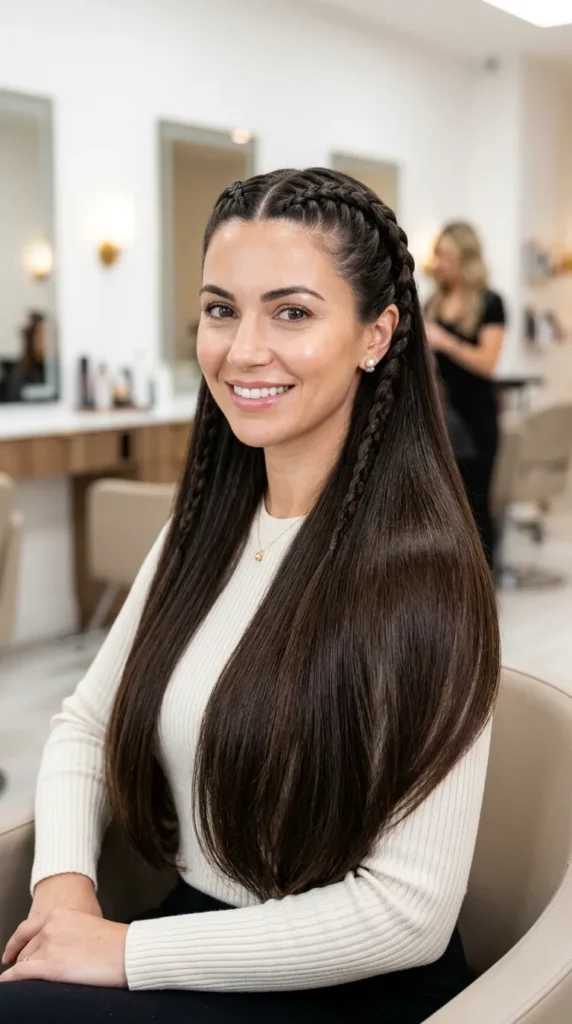
Ultimately combining elements from several approaches above, adjusted specifically for your hair length, texture, and personal style, creates the most genuine version of this trend. This approach continues to be recommended by people who enjoy easy, expressive styling.
Experiment with placement and braid style until you find the combination that feels most authentically like you and suits your everyday routine. It suits both relaxed days and slightly more polished occasions equally well.
Making Braids in Front Straight Hair in Back Work For You
This hairstyle combination is a genuinely playful, versatile approach for people wanting a bit of structure without committing to a fully braided style. The technique can be adapted for almost any hair length, texture, and occasion when done thoughtfully. The maintenance is generally simple, requiring only basic braiding skills and a few styling products to keep everything looking neat throughout the day.
This style is a fun, low commitment statement. It tells people you enjoy playing with texture and contrast in your everyday look. Practice the braiding technique, experiment with placement, and enjoy the effortless charm of this genuinely versatile hairstyle combination every single time you wear it.